
WHY WON’T MY HAIR GROW PAST A CERTAIN LENGTH? UNDERSTANDING CHRONIC HAIR LENGTH
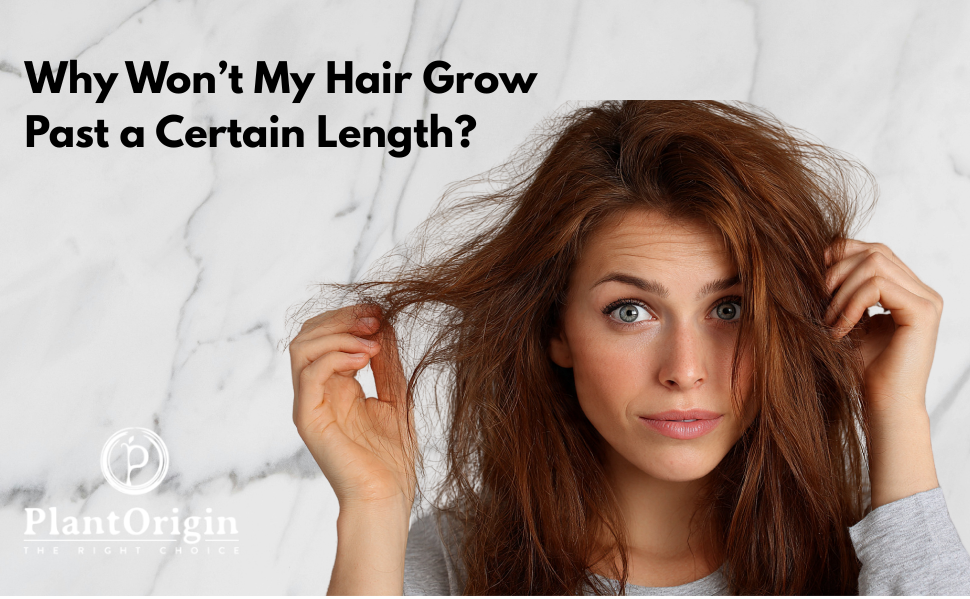
Have you ever felt that your hair grows normally for a while—and then simply stops getting longer? You trim the ends, invest in better products, avoid excessive heat, and patiently wait, yet your hair seems permanently stuck at the same length.
Your hair may not have stopped growing at all. The problem could be the balance between hair growth and hair breakage.
The term “chronic hair length” is sometimes used informally to describe this frustrating situation: hair continues growing from the scalp, but damage and breakage at the ends occur fast enough to prevent noticeable length retention.
Understanding why this happens is the first step toward healthier, stronger, longer-looking hair.
YOUR HAIR MAY BE GROWING—YOU’RE JUST NOT RETAINING THE LENGTH
Hair growth happens at the follicle, while breakage usually happens along the hair shaft or at the ends. This distinction is important.
If your scalp produces new growth but approximately the same amount of length is lost through split ends and breakage, your hair can appear to remain at one length for months—or even years.
Every person also has a genetically influenced hair growth cycle. The anagen, or active growth phase, determines how long an individual hair can continue growing before entering later phases of the cycle and eventually shedding. This is one reason maximum natural hair length varies from person to person.
But when hair repeatedly breaks well before reaching its potential length, lifestyle, hair-care practices and overall health deserve attention.
WHY DOES HAIR KEEP BREAKING?
- Nutritional Gaps
According to health professionals, hair follicles are metabolically active structures that require adequate nutrition. Protein, iron, zinc, essential fatty acids and several vitamins contribute to normal hair structure and follicle function.
Restrictive diets, inadequate protein intake or nutritional deficiencies may affect hair quality or shedding in some people. Biotin is also involved in normal macronutrient metabolism and is widely associated with maintaining healthy hair, skin and nails, although true biotin deficiency is relatively uncommon.
Rather than assuming that every hair-growth problem is caused by one nutrient, think of nutrition as a whole-body foundation for healthy hair.
- Scalp Inflammation
A healthy scalp provides the environment in which hair follicles operate. Persistent itching, redness, flaking or irritation may accompany conditions such as dandruff, seborrheic dermatitis, psoriasis or sensitivity to hair-care products.
Inflammation does not automatically explain every case of limited hair length, but persistent scalp symptoms should not be ignored. A dermatologist can help identify the underlying cause.
- Heat Damage
Frequent flat-ironing, curling, blow-drying at high temperatures and repeated heat styling can weaken the hair shaft.
Once the protective cuticle becomes damaged, hair may become rougher, drier and increasingly vulnerable to splitting and breakage. Heat protectant and lower styling temperatures can help minimize unnecessary damage.
- Chemical Processing
Bleaching, coloring, relaxing and other chemical treatments alter the structure of hair. Repeated or overlapping treatments can reduce fiber strength, particularly when hair is already dry or damaged.
If your hair seems to reach shoulder length and then continually becomes thin or ragged at the ends, cumulative chemical damage could be contributing.
- Mechanical Breakage
Sometimes the culprit is surprisingly simple: friction.
Aggressive brushing, detangling from the roots downward, rubbing wet hair with a rough towel, tight ponytails, extensions and repeatedly sleeping with loose hair rubbing against bedding can all contribute to mechanical stress.
Wet hair deserves particularly gentle handling because the fiber is more vulnerable to stretching and damage.
THE HAIR-LENGTH REPAIR PLAN
The goal is not merely to “make hair grow faster.” A better strategy is to protect the hair you are already growing.
• Start by trimming badly split ends. A split hair shaft cannot permanently repair itself, and delaying a trim may allow splitting to progress farther up the strand.
• Next, prioritize conditioning. Use conditioner after shampooing and consider a weekly deep-conditioning treatment if your hair is dry, chemically treated or frequently styled.
• Reduce excessive heat and always use a heat protectant when heat styling. Give hair periodic breaks from flat irons, curling tools, bleaching and other aggressive treatments.
• Detangle gently, beginning at the ends and gradually moving upward. A wide-tooth comb can be useful, particularly for textured or easily tangled hair.
• Avoid chronically tight hairstyles. If a style causes scalp tenderness or pulls strongly around the hairline, it is creating unnecessary tension.
• At night, reducing friction with a satin or silk pillowcase, bonnet or scarf may help protect fragile lengths.
Most importantly, support hair through a balanced diet containing adequate protein, fruits, vegetables, healthy fats and nutrient-rich whole foods. If you experience significant shedding, scalp inflammation, sudden changes in hair density or unexplained breakage, consult a healthcare professional.
SUPPORT HAIR HEALTH FROM WITHIN
Topical hair care can help protect the strands you already have, while nutrition supports normal hair health from within.
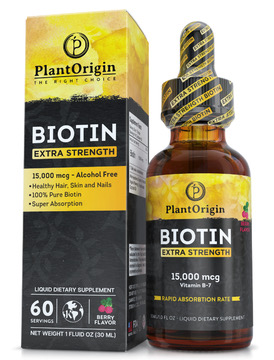
PlantOrigin Extra Strength Liquid Biotin provides 15,000 mcg of biotin per serving in an easy-to-use liquid format designed to support hair, nail and skin health.
Made in the USA, PlantOrigin Liquid Biotin comes in a berry flavor and contains no sugar, stevia or alcohol. It is vegan and Kosher and is manufactured in the USA in an organic facility using organic ingredients.
PlantOrigin Extra Strength Liquid Biotin can be part of a broader beauty and wellness routine, but supplementation should complement good nutrition, gentle hair care and attention to underlying scalp or health concerns.
The Secret May Be Length Retention, Not Faster Growth
When hair refuses to move beyond the same frustrating length, the answer isn’t necessarily to search for something that makes it grow dramatically faster.
Instead, ask: How much of the hair I’m growing am I actually keeping?
Protect the ends. Reduce heat and chemical damage. Address persistent scalp inflammation. Eat adequately. Condition regularly. Minimize friction and tension. Support overall nutritional health.
The real breakthrough may come from shifting the goal from simply growing hair to growing it while preventing breakage.
Once breakage slows enough for growth to outpace damage, those seemingly impossible extra inches finally have a chance to stay.
PLANTORIGIN THE RIGHT CHOICE
To Learn More Visit:
https://amzn.to/3gWz8gX
https://amzn.to/32wwGsO
Amazon.com
Plantorigin.com
Walmart.com
TRY THE PLANTORIGIN EXTRA STRENGTH BIOTIN
~ By Samina Mirza
*These statements have not been evaluated by the FDA. The product is not intended to diagnose, treat, cure or prevent any diseases*